
 Strategy testing
Strategy backtesting: fees, drawdown and validation
What a backtest measures, which costs to include and why an attractive equity curve is not enough.
Build a rule sheet, check one position by hand and test decisions before comparing returns.
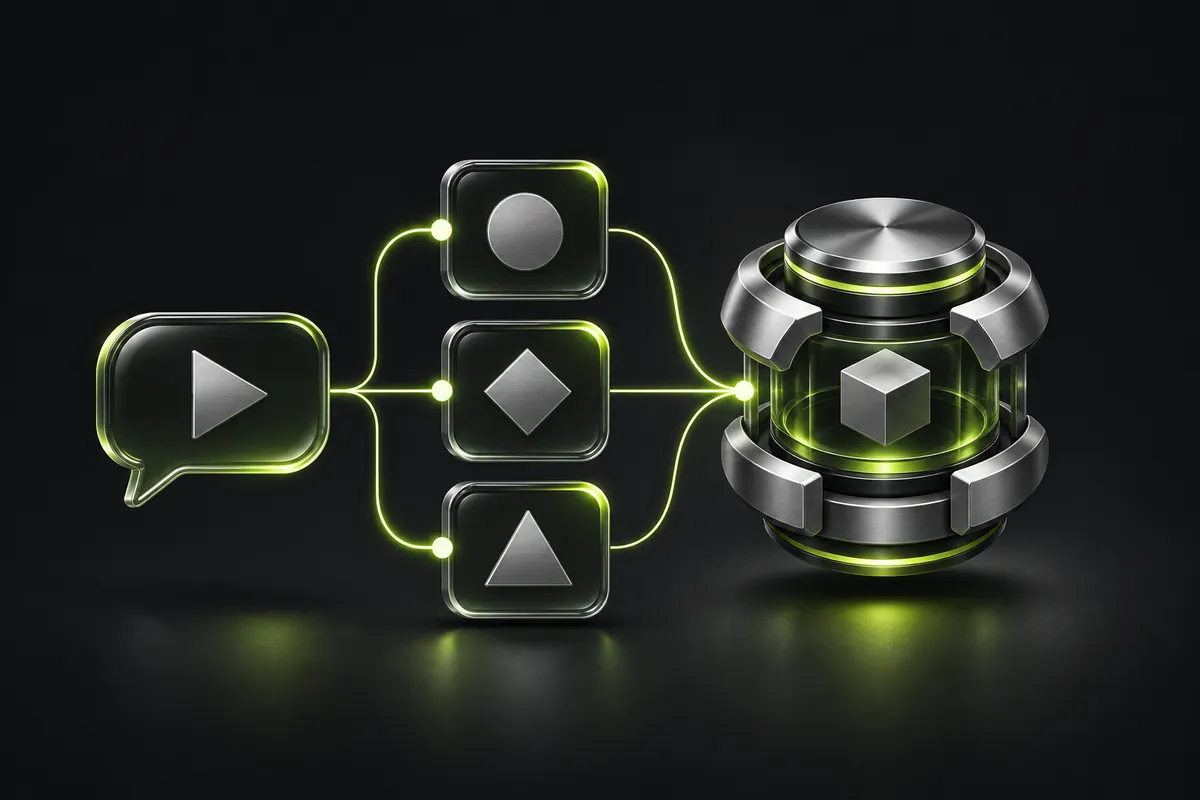
A no-code AI trading bot starts with a specification you can inspect. Use AI to turn your idea into explicit conditions, check the decisions on a few hand-worked examples, and only then choose a testing tool. Removing the need to write code does not remove decisions about prices, position size or what happens after a failed order.
The useful first deliverable is a one-page rule sheet. You should be able to hand it to someone else and get the same expected decisions. If two readers interpret an entry differently, a polished bot interface has not solved the underlying problem.
“AI bot” can describe very different products. One assistant writes a strategy specification; another generates code; a third chooses trades; an execution service sends orders. Ask which role the AI actually performs and where a human approves changes.
For a first experiment, keep the market narrow: one spot pair, one timeframe, one open position and no borrowing. This is a way to reduce the number of things you must explain, not a recommendation to buy that asset. Check whether your chosen tool can export its rules, assumptions and individual decisions. A screenshot of a return cannot answer those questions.
Start with this request and fill in the blanks: “Help me specify a strategy for [market] on [timeframe]. Ask about missing conditions before proposing rules. Define entry, exit, order size, costs and halt conditions separately. Mark every assumption. Do not connect an account or place orders.”
Then make ambiguous phrases measurable. Replace “strong trend” with a named calculation and a threshold. Replace “buy at the crossover” with a precise evaluation time: a completed candle, followed by an order at the next available price. A signal price and an executable fill are different values.
Ask for three situations in which the bot must do nothing. Missing candles, an existing position and an order below the venue minimum are useful starting points. Our strategy rule template covers the broader specification.
Consider an invented spot example with 1,000 USDT available. You cap the planned price loss at 5 USDT, assume entry at 100 and a stop trigger at 98. The price distance is 2 USDT per unit, so the initial sizing calculation is 5 ÷ 2 = 2.5 units, worth 250 USDT.
That is not a guaranteed maximum loss. Fees, price gaps and slippage can make the realized loss larger. If a hypothetical quantity step is 0.1, 2.5 fits it; a computed quantity of 2.57 would need an explicit rounding rule. Rounding down to 2.5 preserves the price-loss budget better than rounding up to 2.6, which would expose 5.2 USDT before costs.
Write the calculation beside the builder's output. A disagreement is a reason to stop and identify the assumption, not to ask AI for a more reassuring explanation.
Create a short acceptance checklist before opening a backtest:
Keep expected and observed actions separately. If the builder cannot show enough detail to compare them, you cannot yet tell whether it implements your idea. Passing these checks establishes consistency on those cases; it says nothing about profitability.
Save a version identifier, parameters, data period and cost assumptions before testing. Changing a stop after seeing a losing trade creates a new version. Retain the old result so you can see how many alternatives you tried.
Use historical testing to examine the rule under declared assumptions, then a suitable paper environment to observe incoming-data behavior. Compare individual decisions, skipped signals and errors. A simulated fill still cannot prove future exchange execution. Read the differences between testing modes before treating two matching charts as validation.
Clerix presents an AI-assisted path from rules to Backtest, Paper, a robot and analytics. The public panels illustrate that process; testing engines and live execution are in development. Explore Clerix features with your rule sheet and verify current availability before connecting an exchange.
You can specify conditions without programming. You still need to explain the inputs, sizing and expected decisions. Ask for an export and independent review when generated code is part of the workflow.
A plausible explanation is not evidence of a trading edge. Require unseen-data testing, costs and a record of rejected variants. No interface can guarantee future profit.
Not for drafting rules or checking arithmetic. Delay account access until you know the exact purpose, available integration and minimum permissions required.
Strategy testingWhat a backtest measures, which costs to include and why an attractive equity curve is not enough.
 Strategy rules
Turn a vague idea into a testable specification with questions, a sample prompt and boundary cases.
 Choosing tools
Understand what a trading bot does and compare its rules, tests, exchange access and costs before activation.